
How To Get Oil Stain Out of Leather
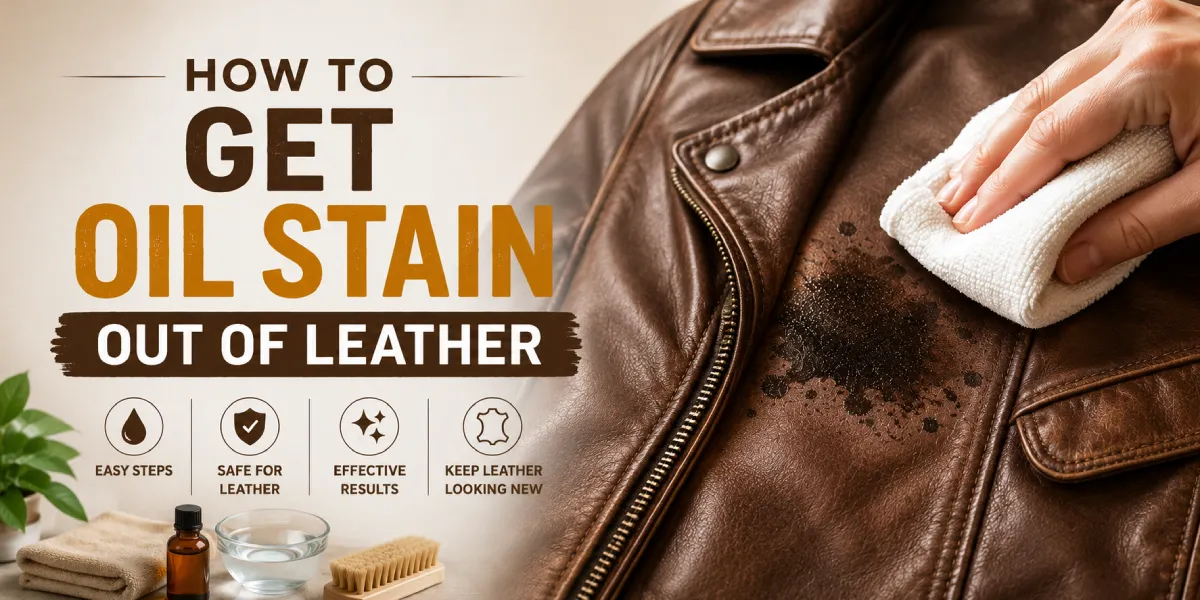
Table of Contents
Oil stains on leather are genuinely stressful. You notice one on your favorite jacket and your stomach drops instantly. The good news is that knowing how to get oil stain out of leather properly makes the whole situation manageable. You do not need to panic. You do not need to rush it to a professional cleaner. Most oil stains on leather can be treated at home with the right approach and a little patience. This guide walks you through everything you need to know so you handle it correctly the first time.
Leather is a natural material. It absorbs things quickly. Oil is no exception. The longer an oil stain sits, the deeper it penetrates into the fibers of the leather. That is why acting fast matters. However, acting fast does not mean acting recklessly. Scrubbing aggressively or using the wrong products can damage the leather permanently. So understanding the right method before you start is the most important step of the entire process.
Why Oil Stains on Leather Are Different From Other Stains
Oil does not sit on the surface of leather the way water does. It absorbs into the material almost immediately. Consequently, you cannot simply wipe it away with a damp cloth and call it done. The oil bonds with the leather fibers and settles in. That is what makes leather jacket oil stain removing more involved than cleaning other fabric types. Furthermore, leather has a finish and a texture that reacts differently to different cleaning agents. What works on fabric can easily destroy leather if applied without care.
Understanding this helps you approach the problem correctly. The goal is not to scrub the stain out. The goal is to draw the oil up and out of the leather fibers using the right absorbent materials and, when necessary, a suitable cleaning agent. Additionally, the type of leather matters too. Smooth finished leather, suede, and nubuck all respond differently to treatment. This guide focuses primarily on smooth finished leather which is the most common type found in leather jackets, bags, and furniture.
Act Fast and Start With an Absorbent
Speed is your best friend when dealing with an oil stain on leather. The moment you notice the stain, blot the excess oil gently with a clean dry cloth. Do not rub. Blotting lifts the surface oil without pushing it deeper into the leather. After blotting, the next step is applying an absorbent powder directly onto the stain. Cornstarch and baking soda both work extremely well here. They pull the oil up from the leather fibers gradually as they sit on the surface.
Apply a generous amount of cornstarch or baking soda to the stained area. Leave it on for several hours. Overnight is even better. The longer it sits, the more oil it absorbs. After the waiting period, brush the powder away gently with a soft cloth. In many cases, especially with fresh stains, this step alone removes a significant amount of the oil. Moreover, this method is completely safe for leather and carries zero risk of damage. It is always the right starting point before moving on to any cleaning agent.
How To Get Oil Stain Out of Leather Using a Degreaser
When the absorbent powder method alone is not enough, the next step is applying a cleaning agent. Using a degreaser on leather is effective but it requires care. Not every degreaser is safe for leather. Harsh chemical degreasers can strip the leather’s natural oils, dry it out, and cause cracking or discoloration. Always choose a degreaser specifically formulated for use on leather. These are widely available and they do the job without the risk of damage.
Apply a small amount of the leather-safe degreaser to a soft clean cloth. Work it gently into the stained area using small circular motions. Do not apply the degreaser directly onto the leather. Always apply it to the cloth first. Additionally, work from the outer edge of the stain inward. This stops the stain from spreading as you work. Leave the degreaser on for the time specified in its instructions, then wipe away with a clean damp cloth. After this step, the stain should be significantly reduced or completely gone.
Step by Step: Removing Oil Stain From Leather the Right Way
This is where everything comes together into a clear, repeatable process. Removing oil stain from leather does not need to be complicated. Following the right steps in the right order is what makes the difference between a successful clean and a damaged jacket.
Here is the complete process broken down simply:
Blot the stain immediately with a dry clean cloth to remove surface oil without rubbing it deeper into the leather. Then apply cornstarch or baking soda generously over the entire stained area and leave it for at least four to six hours or overnight for best results. After that, brush away the powder gently with a soft cloth and assess how much of the stain remains. If the stain persists, apply a leather-safe degreaser to a cloth and work it into the stain gently using circular motions from the outside edge inward. Finally, wipe the area clean with a lightly damp cloth and allow the leather to dry completely at room temperature away from direct heat.
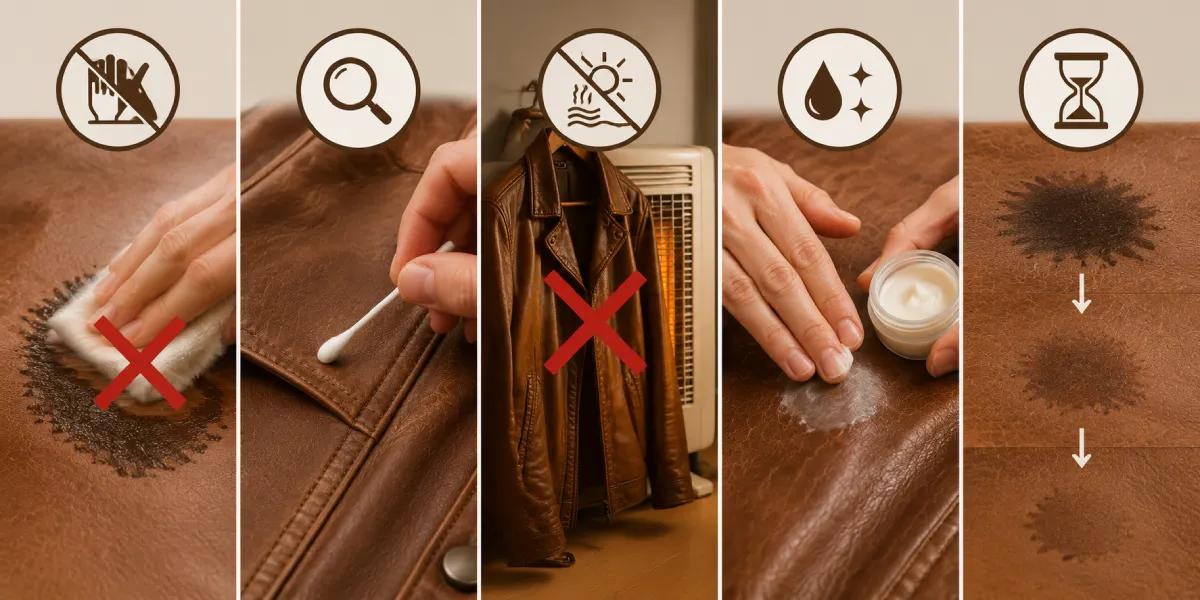
Here are the five key things to remember throughout this process:
Never rub a fresh oil stain. Rubbing pushes the oil deeper into the leather fibers and makes the stain harder to treat effectively.
Always test any cleaning product on a small, hidden area of the leather before applying it to the stain directly. This protects against unexpected discoloration or surface damage.
Keep the leather away from heat sources while it dries. Direct heat causes leather to crack and stiffen, which creates a new problem on top of the original stain.
Condition the leather after cleaning. Cleaning agents, even gentle ones, can remove some of the leather’s natural moisture. A good leather conditioner restores that moisture and keeps the material supple.
Be patient with older stains. A stain that has been sitting for days or weeks will take more than one treatment. Repeat the process rather than increasing the intensity of each step.
How To Clean Oil on Leather and Prevent Future Stains
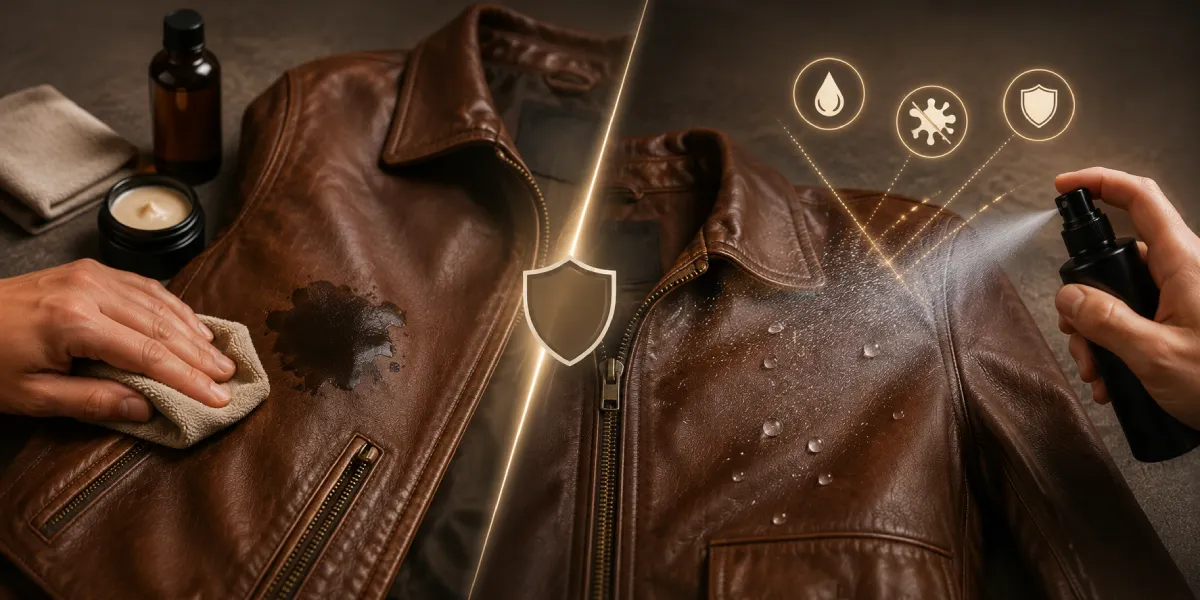
Once you have successfully treated the stain, protecting the leather from future oil stains is worth thinking about. How to clean oil on leather reactively is one thing. Protecting the leather proactively so future stains are less likely to penetrate is another. A quality leather protector spray creates a barrier on the surface of the leather that slows absorption significantly. It does not make the leather stain-proof. However, it gives you more time to react before oil penetrates deeply.
Apply leather protector spray after conditioning the jacket. Follow the product instructions carefully. Most sprays require a clean, dry surface and a short drying time before the protection becomes active. Reapply the spray every few months depending on how frequently you wear the jacket and how much exposure it gets to potential staining situations. If you are a regular leather jacket wearer, reading a solid Leather Jacket Buying Guide before your next purchase can also help you choose leathers with finishes that are naturally more resistant to oil absorption.
How To Get Grease Stains Out of Leather and Keep It Looking Its Best
Grease stains and oil stains are closely related and the treatment approach is largely the same. However, how to get grease stains out of leather can sometimes require slightly more persistence because grease tends to be thicker and denser than a simple cooking oil splash. The absorbent powder method is still the correct starting point. The degreaser step may simply need to be repeated more than once for heavier grease stains.
After any stain treatment, conditioning the leather is not optional. It is essential. How to get oil stain out of leather successfully includes the aftercare step. Conditioning restores the leather’s flexibility and prevents the dryness that leads to cracking over time. Use a conditioner appropriate for your specific leather type and work it in with a soft cloth using gentle circular motions. If you are also dealing with shape issues after treatment, knowing how to remove wrinkles from a leather jacket is the natural next step and worth reading up on alongside this cleaning process.
Caring for a leather jacket well over time is genuinely straightforward once you understand the material. How to get oil out of leather is a skill worth having because accidents happen to even the most careful owners. Las Vegas Jacket believes every leather piece deserves proper care because a well-maintained leather jacket genuinely lasts decades rather than years. If you are building or expanding your leather collection, browsing mens leather jackets with an eye toward finish type and leather quality will serve you better in the long run than simply choosing based on appearance alone. Good leather, properly cared for, is one of the best wardrobe investments you can make.
Explore Our Collection